

Artistic collaboration breathes new life into creative expression, blending diverse talents to forge innovative works. Whether it’s musicians joining forces to create a powerful album or visual artists merging styles for a stunning exhibition, collaboration enhances the artistic landscape. It fosters a sense of community, breaking down barriers and encouraging experimentation.
In a world where individualism often takes center stage, collaborative projects remind us of the beauty in unity. They challenge artists to step outside their comfort zones and embrace fresh perspectives. As they navigate the complexities of working together, they not only produce remarkable art but also cultivate relationships that can last a lifetime. Exploring the dynamics of artistic collaboration reveals the transformative power of shared creativity.
Understanding Artistic Collaboration
Artistic collaboration involves artists working together to shape and enhance their creative output. This collaboration enriches art by blending different styles, techniques, and ideas.
Definition and Importance
Artistic collaboration is the process where multiple artists unite to create a single piece or project. Collaboration holds significant importance as it allows artists to merge varying perspectives and experiences. This synergy leads to innovative artworks that might not arise from solo endeavors. Through collaboration, artists gain access to new techniques, challenge their creativity, and expand their audiences. The exchange of ideas fosters a supportive environment, enhancing artistic growth and enriching the cultural landscape.
Historical Context
Artistic collaboration dates back to ancient civilizations where artists worked together to construct monumental pieces, such as the Egyptian pyramids or Greek temples. In the Renaissance, collaborative workshops flourished, evidenced by partnerships like that of Leonardo da Vinci and Michelangelo. In the 20th century, movements like Surrealism and Dadaism emphasized group efforts, showcasing the power of collective creativity. Contemporary examples, such as community art projects or cross-disciplinary collaborations, continue to reflect this historical legacy, demonstrating how collaboration remains a cornerstone in the evolution of art.
Benefits of Artistic Collaboration
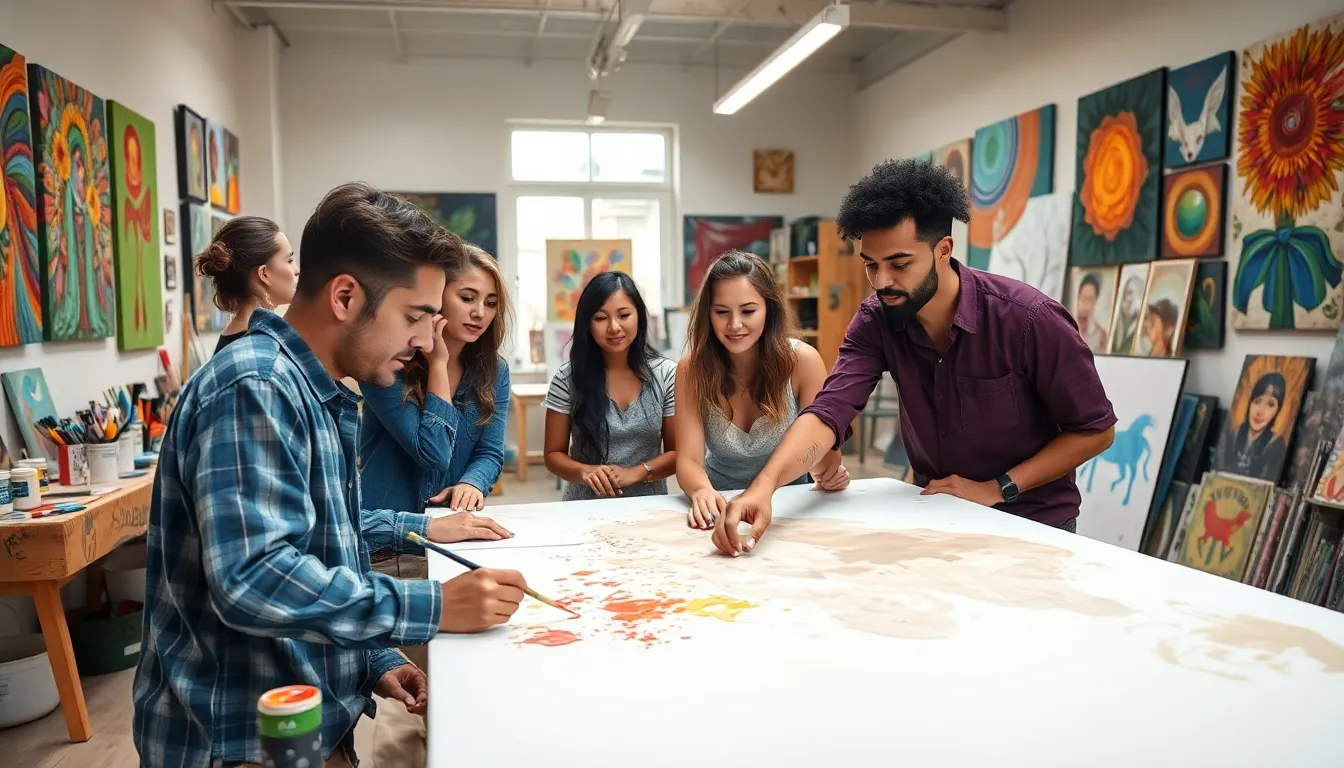
Artistic collaboration offers numerous advantages, significantly enhancing the creative process. By uniting various talents and perspectives, artists can achieve remarkable outcomes and foster a vibrant community.
Enhanced Creativity
Enhanced creativity surfaces when artists collaborate. They blend individual skills and techniques, producing innovative artworks that stem from collective imagination. Collaboration often sparks inspiration, as artists challenge each other’s ideas, pushing the boundaries of what’s possible in art. For instance, partnerships between visual artists and musicians can lead to multimedia projects that captivate audiences in unique ways, such as installations incorporating live performance elements.
Diverse Perspectives
Diverse perspectives enrich the artistic collaboration experience. When artists from different backgrounds join forces, they bring unique viewpoints that influence the creative process. This variety fosters a dynamic environment, encouraging experimentation and exploration. For example, collaborations between painters and digital artists merge traditional and modern techniques, resulting in fresh expressions that reflect a broader range of cultural influences. Embracing these diverse perspectives ultimately leads to artworks that resonate on multiple levels, appealing to wider audiences.
Types of Artistic Collaboration
Artistic collaboration manifests in various forms, each enriching the creative landscape through unique partnerships. Two notable types include interdisciplinary collaborations and community-based projects.
Interdisciplinary Collaborations
Interdisciplinary collaborations blend multiple artistic disciplines, such as visual arts, music, dance, and theater. Artists engaged in these collaborations often share techniques and ideas, producing innovative work that transcends traditional boundaries. For example, visual artists may join forces with musicians to create immersive installations that combine sight and sound. Such partnerships not only enhance artistic expression but also challenge creators to explore new methods, resulting in dynamic and multi-faceted artworks. Institutions and festivals often showcase these collaborations, highlighting their impact on contemporary culture.
Community-Based Projects
Community-based projects involve artists working with local communities to create art that reflects shared experiences and values. These initiatives often aim to address social issues or celebrate cultural heritage, fostering a sense of belonging. For instance, mural projects may engage residents in the design process, promoting community pride and inclusivity. Through these endeavors, artists establish meaningful connections with participants, enriching their own creative practices while empowering others. Community-based projects demonstrate the significant role of art in societal development and cohesion.
Challenges in Artistic Collaboration
Artistic collaboration, while beneficial, presents several challenges that can impact the creative process. Understanding these hurdles is crucial for successful partnerships.
Communication Barriers
Communication barriers often hinder the collaborative process. Misunderstandings can arise from different artistic languages, making it essential for artists to establish clear channels. Regular discussions and feedback sessions foster an environment where ideas flow freely. Utilizing visual aids, sketches, and reference materials can bridge the gap, ensuring everyone is on the same page.
Conflict Resolution
Conflicts during collaboration can arise from differing visions, work ethics, or personal dynamics. Addressing these conflicts promptly prevents escalation and preserves creative momentum. Establishing ground rules at the outset encourages respectful dialogue. Compromise plays a key role, allowing artists to find common ground while respecting individual contributions. Seeking mediation from a neutral party can also facilitate conflict resolution, ensuring that all voices are heard and valued.
Notable Examples of Artistic Collaboration
Artistic collaboration often results in groundbreaking works that redefine creative boundaries. Numerous famous partnerships showcase the power of collective artistry throughout history.
Case Study: Famous Collaborations
- Andy Warhol and Jean-Michel Basquiat
This dynamic duo merged pop art and graffiti, producing distinctive pieces that challenged conventional art norms. Their collaboration included the creation of large-scale paintings, blending Warhol’s commercial aesthetic with Basquiat’s bold imagery.
- Picasso and Braque
These pioneers of Cubism collaborated in the early 20th century, jointly developing techniques that transformed visual representation. Their partnership resulted in innovative compositions that redefined perspective and form in art.
- Gilbert & George
This artist duo explores themes of identity, society, and art through their multimedia projects. Their work, characterized by its strong visual style, highlights the synergy of their combined artistic vision.
- Hannah Höch and Raoul Hausmann
As key figures in the Dada movement, their collaboration in photomontage and graphic design challenged traditional art concepts. Their fusion of different media created a provocative critique of social and political issues.
Impact on Art Movements
Collaboration significantly impacts art movements, driving innovation and evolution.
- Surrealism
Collaborative efforts among Surrealist artists like André Breton and Salvador Dalí produced works that explored dreams and the unconscious. Their interactions deepened the movement’s rich narrative and imaginative scope.
- The Bauhaus
This school emphasized interdisciplinary collaboration between architects, designers, and artists, fostering a holistic approach to art and design. This synergy catalyzed modernist architecture and influenced contemporary design principles.
- Fluxus
This movement, characterized by collaborative performance art, challenged conventional definitions of art. Artists such as Yoko Ono and George Maciunas worked together on experimental projects that blurred the lines between art and everyday life.
- Street Art
Collaborations between street artists often lead to large-scale murals that reflect community identities and social issues. These partnerships not only enhance the visibility of street art but also foster community engagement, addressing important cultural narratives.
Artistic collaboration stands as a powerful force in the creative landscape. By merging diverse talents and perspectives, artists not only enhance their individual expressions but also contribute to a richer cultural tapestry. The relationships forged through collaboration can lead to innovative works that push boundaries and resonate with a broader audience.
As artists navigate the challenges of working together, they cultivate an environment of growth and experimentation. This dynamic process not only transforms their art but also strengthens community ties and fosters a sense of belonging. Embracing collaboration will continue to be vital for artists seeking to explore new horizons and create meaningful connections within the ever-evolving world of art.


